
Powdery mildew coats young leaves, flowers, and small fruit in white fungal growth. Unlike anthracnose it favors dry weather with cool nights, which makes it the bigger threat in drier growing regions — a bad infection can take most of the season’s flowers with it.
Symptoms
- White powdery coating on flowers, young leaves, and fruit
- Flower and fruit drop
- Distorted or stunted new growth
- Reduced fruit set and yield
Visual identification
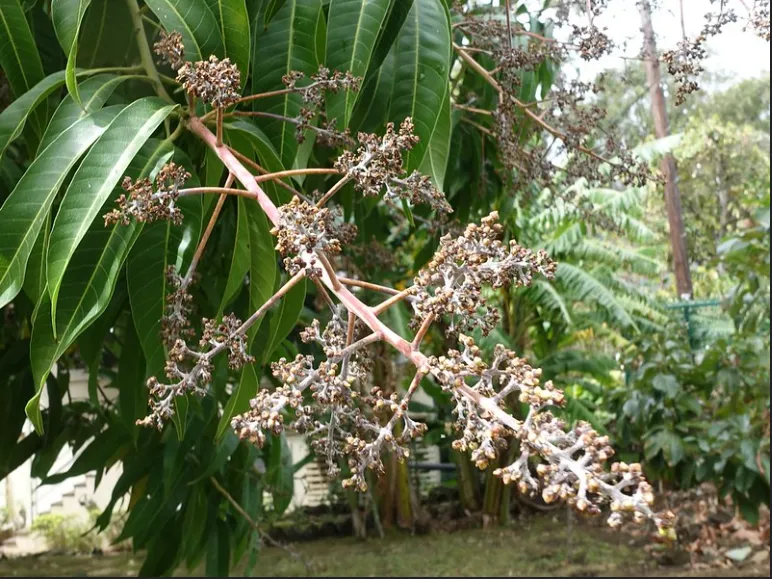
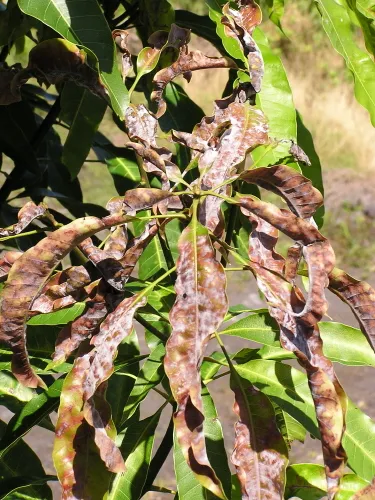
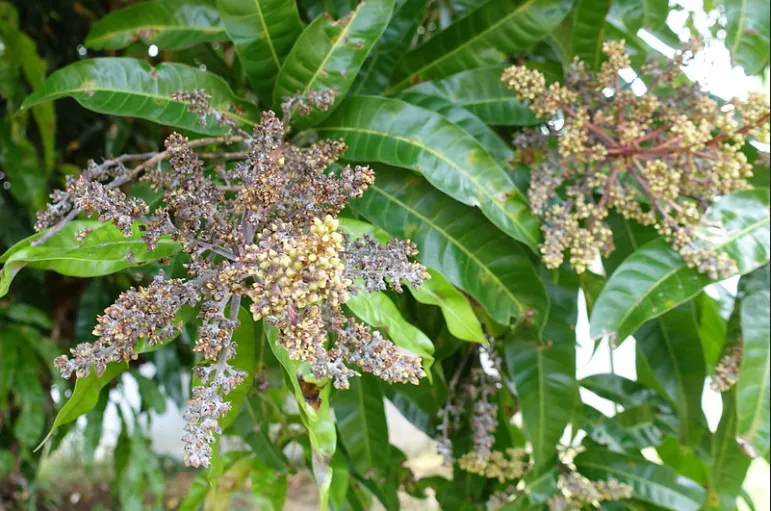
Photos: Scot Nelson, University of Hawaii CTAHR (CC0)
Seeing something like this on your tree? Photograph the leaf and the
Mango Atlas scanner will help you confirm the diagnosis before you treat.
Get the app.
Conditions that favor powdery mildew
- Dry weather with cool nights
- High humidity but no rain
- Dense canopy with poor air circulation
Treatment & management
Cultural control
- Prune to improve airflow and reduce humidity in the canopy
- Remove infected plant debris
- Avoid excessive nitrogen fertilization, which promotes susceptible new growth
Chemical control
- Sulfur-based fungicides are effective
- Copper-based fungicides also work well
- Apply preventively during the flowering period
- Repeat applications every 10-14 days during high disease pressure
Spray schedule
| Pre-bloom | Apply copper fungicide when flower buds begin to swell. |
|---|---|
| Full bloom | Spray every 7-10 days during flowering with copper or sulfur. |
| Fruit set | Continue sprays every 10-14 days as fruit develops. |
| Rainy periods | Increase frequency to every 5-7 days during wet weather. |
Safety
- Always read and follow pesticide label instructions
- Wear appropriate protective equipment when spraying
- Observe pre-harvest intervals before picking fruit
- Do not spray during windy conditions
- Store all chemicals safely away from children and pets
Information compiled from University of Florida IFAS Extension, University of Hawaii CTAHR, international mango disease research, and integrated pest management guidelines. Photos: Scot Nelson, University of Hawaii CTAHR (CC0).