
How to Tell If a Mango Is Ripe (With Examples by Variety)
A ripe mango yields to gentle pressure and may smell fruity near the stem. Skin color depends on the variety: Carrie and Keitt can be green when ripe. Start with feel, then use the variety’s usual color changes as supporting clues.
That distinction matters when you’re standing over a fruit bowl wondering which mango to cut. Waiting for every mango to turn yellow can mean missing its best eating stage. Choosing the reddest one doesn’t solve the problem either.
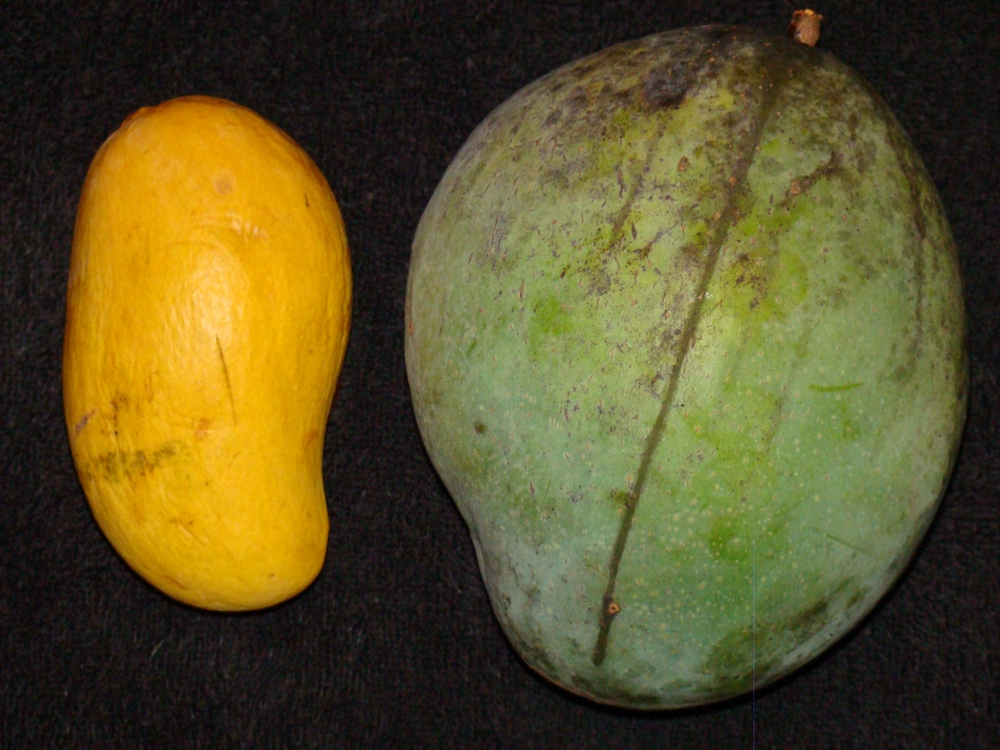

What is the easiest way to check a mango for ripeness?
Hold it in your hand and squeeze gently. A fruit that feels very hard needs more time if you want a sweet, juicy mango for eating fresh. A little give is the main buying and eating cue recommended by the National Mango Board.
Next, smell near the stem. A fruity scent can help, but the Board describes it as something ripe mangoes sometimes have. Treat aroma as a second clue rather than a pass-or-fail test.
Use light pressure. You’re checking for softness, not trying to leave a dent. Especially soft varieties such as Carrie bruise easily.
Can a green mango be ripe? Carrie and Keitt show why
Yes. Green skin and unripe flesh are different things. Two varieties worth remembering are Carrie and Keitt.
Carrie: green skin can hide very soft fruit
Carrie can remain green when ripe, although some fruit turns yellow. In its own growing conditions, Tropical Acres Farms reports that inland-grown Carrie often retains green skin. The farm also describes its ripe flesh as exceptionally soft and easily bruised.
So “wait until it’s completely yellow” is a poor universal rule for Carrie. Pay attention to softening and handle the fruit carefully. The practical lesson is about variation: a yellow Carrie isn’t automatically wrong, and a green Carrie isn’t automatically unripe.
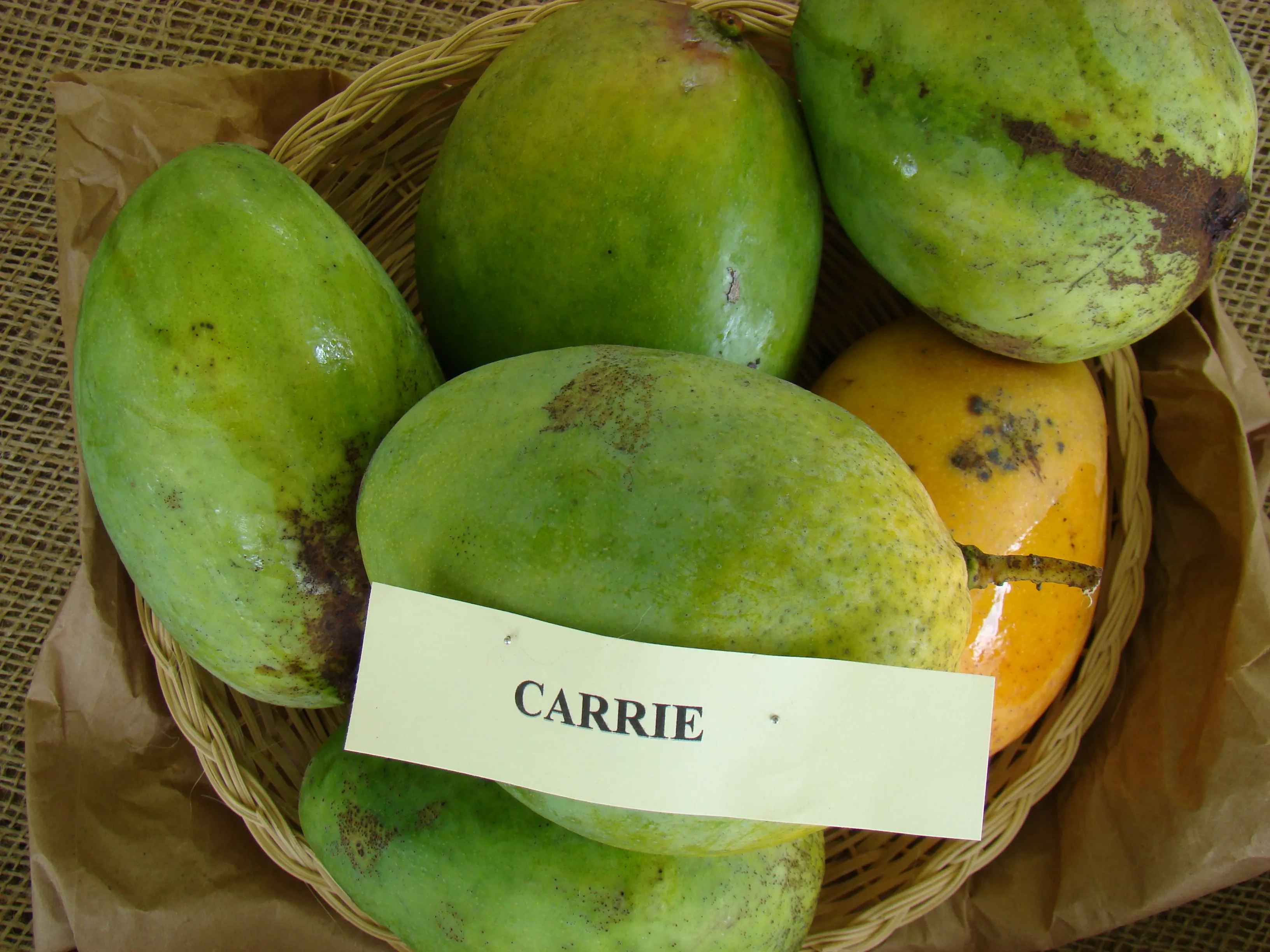
Carrie display at the Redland Summer Fruit Festival, Florida. This photograph documents the variety’s appearance; the ripeness of each fruit was not recorded. Photo: Asit K. Ghosh (Thaumaturgist), Wikimedia Commons, CC BY-SA 3.0. Web-optimized; no color changes.

Keitt: don’t wait for yellow
Keitt is another useful example, including for supermarket shoppers. The National Mango Board’s Keitt profile says its skin stays green when ripe and recommends judging it with gentle pressure. Some fruit has a small pink blush, but that isn’t a ripeness scale.
Keitt also has relatively firm flesh compared with very soft varieties. You don’t need every mango to reach Carrie’s texture before eating it. Compare the fruit with the normal character of its own variety.
What does a ripe mango look like by variety?
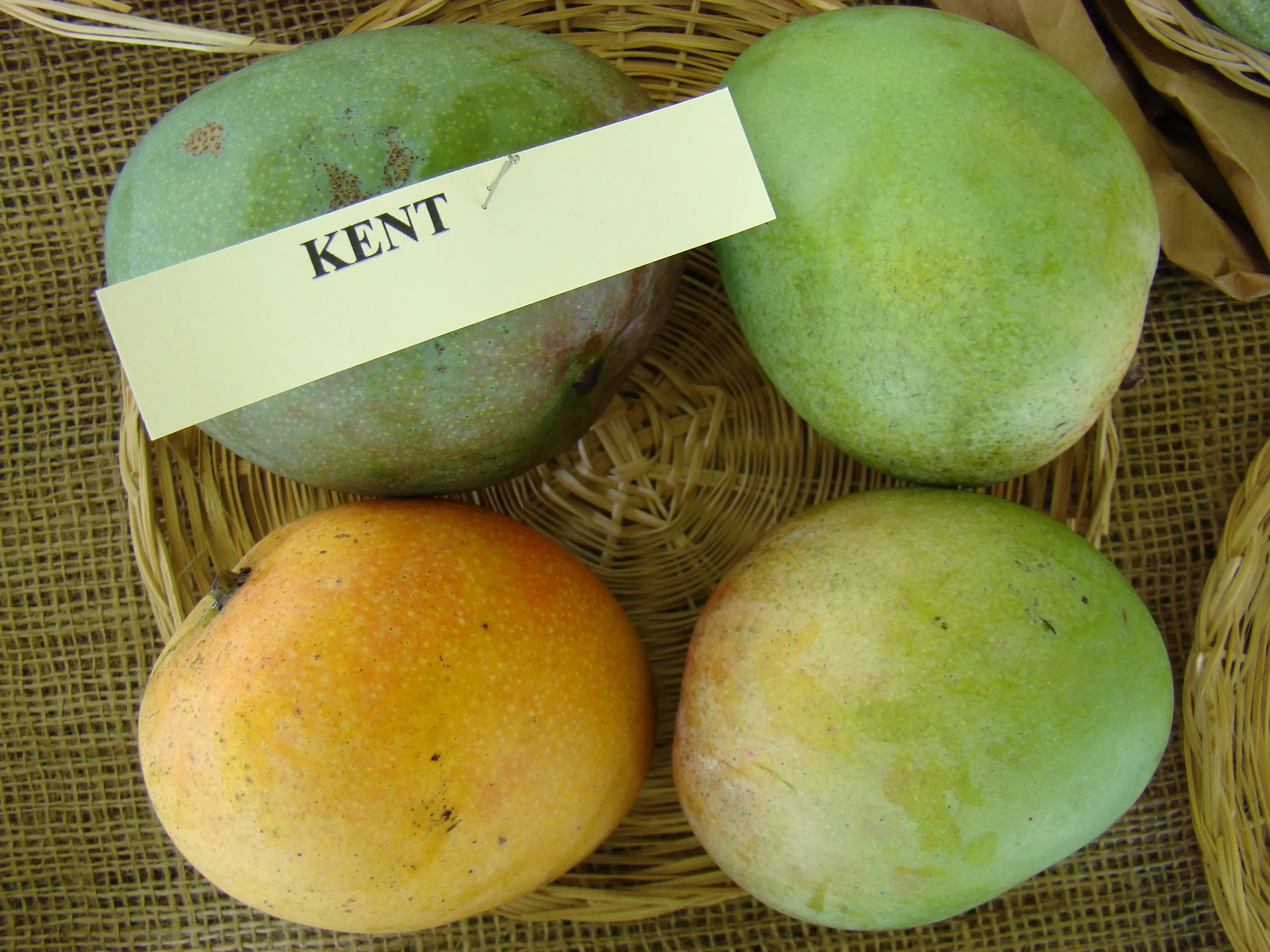
Kent display at the Redland Summer Fruit Festival, Florida. The fruit shows a range of skin colors; individual ripeness stages were not recorded. Photo: Asit K. Ghosh (Thaumaturgist), Wikimedia Commons, CC BY-SA 3.0. Web-optimized; no color changes.

Use this comparison to interpret color, then confirm with feel. Each variety name links to its Mango Atlas profile.
| Variety | Useful appearance clues | What to check |
|---|---|---|
| Carrie | Can remain green or develop yellow skin | Softening; handle gently because ripe fruit bruises easily |
| Keitt | Can stay green even when ripe | Give under gentle pressure; don’t wait for yellow |
| Ataulfo / Honey | Skin deepens to golden yellow; small wrinkles can appear | Color change together with gentle give |
| Kent | Yellow undertones or dots become more evident as it ripens | Feel alongside those changes; red blush alone isn’t enough |
| Tommy Atkins | Red blush with green or orange-yellow areas; may offer no clear visual ripeness cue | Gentle pressure instead of choosing by redness |
Sources: Tropical Acres’ Carrie observations above and the National Mango Board’s Honey, Keitt, Kent, and Tommy Atkins profiles.
Mango Atlas currently records skin-color descriptions for 329 of its 346 varieties. Those descriptions help explain what a variety can look like; they aren’t individual-fruit ripeness tests. This guide pairs variety information with handling advice instead of turning a color label into a yes-or-no verdict.
Does a red mango mean it’s ripe?
No. Tommy Atkins often has extensive red coloring, yet the National Mango Board cautions that it may give no useful visual signal of ripeness. A dramatic red blush can make a mango look ready before its texture is where you want it.
For a red supermarket mango, make the same gentle firmness check you would for a green one. If you know the variety from its label, use its profile rather than comparing it with a different mango beside it.
Is a slightly wrinkled Ataulfo overripe?
Not necessarily. Small wrinkles can be a normal feature of a fully ripe Ataulfo, also called Honey. Its golden color and slight wrinkling are useful clues when considered together with softness.
That doesn’t make wrinkling a universal mango rule. Nor does it establish that a damaged fruit is good to eat. It simply means a smooth, taut skin isn’t a requirement for a ripe Ataulfo.
How soft should a mango be for slicing?
Think about the texture you want. The National Mango Board’s culinary ripeness chart distinguishes firm, crunchy fruit from ripe, juicy fruit and the softer stage suited to purées.
For fresh slices, look for yielding fruit that still holds its shape. Softer ripe fruit suits a purée or sauce. A firm, tart mango can suit salads or pickles, but won’t give the same experience as sweet, ripe fruit. “Ready” partly depends on what you’re making.
What should you do if your mango is still hard?
Leave an unripe whole mango at room temperature and check it as it softens. A paper bag can speed the process. Once ripe, refrigeration slows further ripening; the National Mango Board advises up to five days for whole ripe mangoes in the refrigerator. Very soft, delicate fruit should be used sooner.
Don’t promise yourself an exact ripening day based on skin color. Starting maturity and conditions matter. For shoppers, the useful routine is simple: check the fruit’s feel before deciding when to cut it.
Is ready to pick the same as ready to eat?
No. Home growers need to distinguish harvest maturity from eating ripeness. A mango can be developed enough to ripen after picking while still feeling firm.
UF/IFAS Extension describes filled-out shoulders and the nose of the fruit as harvest-maturity clues. In a cut sample, yellowing flesh near the seed can indicate maturity before an obvious skin-color change. These are picking clues, not instructions to eat every firm mango immediately.
Carrie deserves variety-specific handling: Tropical Acres reports poor results from picking it too early and recommends allowing some softening on the tree for best flavor in its conditions. A general supermarket ripening guide shouldn’t replace that local growing knowledge.
For your next mango, start with its name, check the feel, and use color in context. Explore our variety guide or look up varieties in Mango Atlas to compare their usual texture, flavor, and appearance.
Go deeper than any article
300+ variety profiles, your trees, your harvests, one app.